
Expensive Fruits in the World: Fruits are often associated with health and everyday nutrition, but some varieties stand far above the ordinary—commanding astonishing prices due to rarity, cultivation methods, and cultural value. In 2026, the world’s most expensive fruits are not just food items but symbols of luxury, craftsmanship, and exclusivity. From Japan’s perfectly grown melons to rare tropical delicacies, these fruits are cultivated with extreme precision and care. Their premium pricing reflects limited availability, unique taste, and even gifting traditions in certain countries. This article explores the top 10 most expensive fruits in the world, highlighting what makes them so valuable and highly sought after.
Top 10 Most Expensive Fruits in the World 2026
In 2026, luxury fruit remains a fascinating intersection of agriculture, culture, and status. Japan dominates the ranking thanks to its meticulous greenhouse cultivation, strict grading, limited production, and a deep tradition of giving perfect fruit as prestigious gifts (especially during Chūgen and other occasions). Auction prices for the season’s first or finest specimens often reach eye-watering levels for publicity, while everyday retail prices for premium specimens are high but far lower. Here is a detailed look at the top 10 most expensive fruits, ranked primarily by record or peak reported prices, with notes on typical costs, origins, and why they command such premiums.
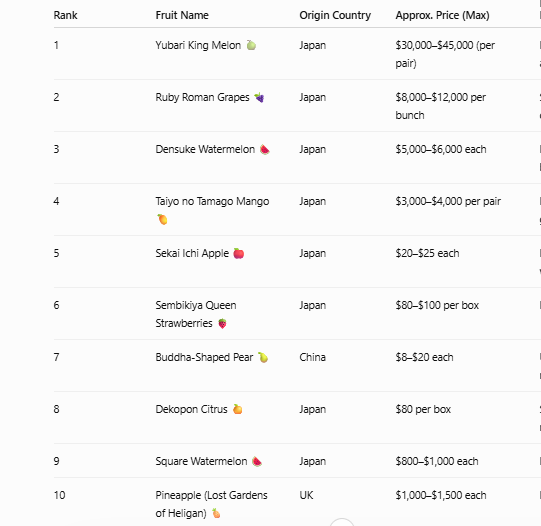
| Rank | Fruit Name | Origin Country | Approx. Price (Max) | Key Reason for High Price |
|---|---|---|---|---|
| 1 | Yubari King Melon | Japan | $30,000–$45,000 (per pair) | Perfect shape, sweetness, auction rarity |
| 2 | Ruby Roman Grapes | Japan | $8,000–$12,000 per bunch | Strict grading, large size, rare quality |
| 3 | Densuke Watermelon | Japan | $5,000–$6,000 each | Limited production, unique black skin |
| 4 | Taiyo no Tamago Mango | Japan | $3,000–$4,000 per pair | High sugar content, premium grading |
| 5 | Sekai Ichi Apple | Japan | $20–$25 each | Hand-pollinated, honey-washed |
| 6 | Sembikiya Queen Strawberries | Japan | $80–$100 per box | Perfect size, luxury packaging |
| 7 | Buddha-Shaped Pear | China | $8–$20 each | Unique molded shape, novelty value |
| 8 | Dekopon Citrus | Japan | $80 per box | Seedless, extremely sweet, rare quality |
| 9 | Square Watermelon | Japan | $800–$1,000 each | Decorative luxury fruit |
| 10 | Pineapple (Lost Gardens of Heligan) | UK | $1,000–$1,500 each | Rare cultivation method |
1. Yubari King Melon (Japan)
Record auction price: Approximately $36,500–$46,000 for a pair (5.8 million yen in May 2026 at Sapporo Central Wholesale Market, breaking the previous 2019 record of 5 million yen / ~$45,000). Typical retail: $100–$300+ per melon; top gift-grade can exceed $700–$1,000.
Grown exclusively in greenhouses in Yūbari, Hokkaido, this hybrid of Earl’s Favourite and Burpee’s Spicy cantaloupe is prized for its perfect round shape, flawless netted rind, intense sweetness, and aromatic orange flesh. Farmers prune vines to one fruit per plant, massage the melons, control temperature and humidity precisely, and leave a signature T-shaped stem. Only the highest grades (“fuji” and similar) fetch top prices. These melons symbolize status and are often displayed or gifted rather than casually eaten. The first-of-season auctions drive the extreme figures for marketing impact.
2. Ruby Roman Grapes (Japan)
Record auction price: Around $10,000–$12,000 (or higher in some reports) for a single premium bunch. Typical retail: $90–$450 per bunch.
Cultivated only in Ishikawa Prefecture, these large, ping-pong-ball-sized red grapes must meet rigorous standards: each berry at least 20 grams, high sugar content (typically 18%+), uniform deep ruby color, and perfect shape. Bunches are individually graded; only a tiny percentage qualify for the top “Ruby Roman” designation, and in some years almost none reach the ultra-premium class. Developed through selective breeding, they are celebrated for their size, sweetness, and visual drama. They are primarily luxury gifts rather than everyday table fruit.
3. Densuke Watermelon (Japan)
Record auction price: Up to about $6,000–$6,100 (historical high around ¥650,000). Typical retail: $200–$600.
This rare black-rinded watermelon is grown in limited quantities (roughly 10,000 or fewer per year) mainly in Hokkaido’s Toma area on volcanic soil. Its glossy, nearly solid black exterior (no stripes) and crisp, exceptionally sweet red flesh set it apart. The limited supply and striking appearance make it a collector’s and gift item. Auction prices for the season’s first or finest specimens are the ones that make headlines; ordinary premium examples sell for hundreds of dollars.
4. Taiyō no Tamago (“Egg of the Sun”) Mango (Japan)
Record auction price: Up to roughly $1,500–$3,000 for a pair (hundreds of thousands of yen in peak sales). Typical retail: $50–$150 each for high-grade fruit.
Produced in Miyazaki Prefecture, these mangoes earn their name from their egg-like shape and intense reddish-orange skin when fully ripe. Strict criteria cover size, color, sugar content, and appearance. Only those meeting the highest standards receive the Taiyō no Tamago branding. They are hand-selected and often presented in elegant packaging as premium gifts. Their rich, sweet flavor and visual perfection drive demand in Japan’s luxury fruit market.
5. Lost Gardens of Heligan Pineapple (United Kingdom)
Reported valuation/price: Around $1,000–$1,600 (or ~£1,000) per fruit.
Grown in Cornwall using restored Victorian “pineapple pits” heated by decomposing manure and other traditional methods, these pineapples recreate 19th-century aristocratic cultivation. Production is extremely labor-intensive and limited, making each fruit a historical novelty and true rarity. They are more about the heritage and effort than mass-market availability.
6. Square (or Cubic) Watermelon (Japan)
Typical price: $80–$800 (commonly cited around $100–$200+).
Developed in Zentsuji and other areas, these watermelons are grown inside square glass or plastic molds primarily for aesthetic and space-saving reasons (easier to store in Japanese refrigerators). They are often harvested before full ripeness to retain the shape, so flavor is secondary to novelty and presentation. They function more as decorative or gift items than superior eating fruit.
7. Premium Japanese Strawberries (Bijin-hime, Sembikiya Queen, etc.)
Peak prices: Bijin-hime (“Beautiful Princess”) can reach $300–$500 for a single large berry (only ~500 produced annually by specialist growers). Sembikiya Queen or similar high-end boxes of 10–12 berries often sell for $80–$100+. Typical high-end retail: $5–$15+ per berry for white or specialty varieties; boxes in the $80–$250 range.
Japan’s strawberry culture emphasizes perfect uniformity, gloss, size, and balanced sweetness. Bijin-hime are especially large (baseball-sized possible), aromatic, and rare. Luxury fruit boutiques such as Sembikiya in Tokyo present them like jewelry. White Jewel / Shiroi Houseki strawberries (pale with red seeds) also command premiums for their novelty and delicate flavor.
8. Sekai Ichi Apple (Japan)
Typical price: $20–$50 each.
Meaning “World’s Number One,” these large, blemish-free apples (often from Aomori Prefecture) are hand-pollinated, carefully nurtured, and sometimes washed or polished for a glossy finish. Their size, perfect appearance, and premium packaging make them gift-worthy. They represent high-end retail rather than extreme auction spectacles.
9. White Jewel / Hokkaido White Strawberries (Japan)
Typical price: $5–$15 per berry (or premium boxes higher).
These pale strawberries with red seeds are grown under controlled low-light conditions to achieve their distinctive color. Rarity, visual appeal, and delicate taste place them in the luxury category, though generally below the ultra-rare red premium varieties.
10. Buddha-Shaped Pears (China)
Typical price: Around $7–$10 each (sometimes higher as novelty collectibles).
Grown in molds in Hebei Province so the fruit takes the shape of a small Buddha figure, these pears are novelty items valued for their symbolic and artistic appeal more than superior flavor. They illustrate how creative cultivation and gifting culture can elevate ordinary fruit.
Why These Fruits Cost So Much
Several overlapping factors drive the prices:
- Extreme care and labor — Hand-pollination, pruning to one fruit per plant, daily massaging, precise climate control, and individual grading.
- Scarcity — Tiny production volumes (sometimes only hundreds or a few thousand units per year).
- Aesthetic perfection — Symmetry, color uniformity, size, and flawless skin are non-negotiable for top grades.
- Cultural role — In Japan especially, perfect fruit is a respected gift that signals status, respect, and thoughtfulness.
- Auction and media effect — First-of-season sales create publicity and temporary sky-high bids that do not reflect normal market prices.
Retail availability exists for many of these through specialty Japanese fruit shops, high-end department stores, and limited international exporters, but true auction-record specimens remain rare and largely ceremonial. Prices fluctuate with harvest quality, currency rates, and demand. While ordinary supermarket fruit nourishes the body, these luxury specimens celebrate human craftsmanship applied to nature — edible status symbols that continue to captivate in 2026.