
Top 30 Best Village Business Ideas: Villages across India hold immense untapped potential for entrepreneurship. With rising demand for organic produce, dairy products, local services, and value-added goods, rural areas offer low-competition opportunities that cities often lack. Many of these businesses require modest capital, leverage local resources like land, labour, and traditional skills, and can generate steady income while supporting the community. Government schemes such as Mudra loans, NABARD subsidies, and FPO support further ease the path for first-time entrepreneurs. Choosing the right idea based on available land, skills, and local demand can turn a small village venture into a sustainable livelihood.
Top 30 Best Village Business Ideas
This article lists 30 practical, profitable business ideas suited for rural India, with clear guidance on why they work and how to begin.
1. Dairy Farming
Dairy farming remains one of the most reliable village businesses because milk, curd, ghee, and paneer are daily essentials with consistent demand. Start with 2–5 cows or buffaloes, focus on proper feeding and hygiene, and sell milk locally or to cooperatives like Amul. Value-added products such as ghee and paneer can significantly raise margins. Initial investment typically ranges from ₹40,000 to ₹1.5 lakh depending on the number of animals. Daily income can reach ₹25,000–₹80,000 monthly once the herd is productive. Government subsidies on cattle and cattle sheds make entry easier for small farmers.
2. Organic Vegetable Farming
Urban and semi-urban consumers increasingly prefer chemical-free vegetables, creating strong demand for organic produce from villages. Grow high-value crops such as tomatoes, spinach, capsicum, and leafy greens using natural compost and crop rotation on even 500–1,000 square metres of land. Sell directly to local markets, organic stores, or through WhatsApp groups and platforms. Investment can start as low as ₹10,000–₹50,000 for seeds, tools, and basic irrigation. Proper certification (PGS-India) allows premium pricing. Consistent quality and timely supply help build loyal customers and higher returns than conventional farming.
3. Poultry Farming
Poultry farming offers quick returns because broiler chickens reach market weight in 6–7 weeks and layers provide daily eggs. It requires relatively little land and can be started in a small shed with proper ventilation and feed management. Demand for chicken and eggs stays high in both villages and nearby towns. Investment usually falls between ₹20,000 and ₹1 lakh for birds, feed, and housing. A well-managed unit can generate ₹20,000–₹80,000 per cycle or monthly. Biosecurity measures and vaccination are essential to reduce disease risk and protect profits.
4. Goat Farming
Goats are hardy, require less space and feed than larger cattle, and provide meat, milk, and manure. They adapt well to village conditions and can be reared on a small scale for local sale or larger markets. Start with a few healthy animals and expand as experience grows. Investment often ranges from ₹50,000 to ₹2 lakh. Monthly income potential can reach ₹40,000–₹1.5 lakh with good breeding and management. Goat manure also supports organic farming, creating additional value on the same land.
5. Mushroom Farming
Mushroom cultivation needs minimal land and can be done indoors or in small sheds using agricultural waste like paddy straw. Oyster and button mushrooms have strong demand in cities and local markets. The crop cycle is short, allowing multiple harvests in a year. Startup costs can be as low as ₹5,000–₹30,000 for spawn, substrate, and basic setup. A small unit can yield good profits within a few months if temperature and humidity are controlled. Training programmes and online resources make it accessible even for beginners.
6. Flour Mill (Atta Chakki)
Every household needs fresh flour, making a small flour mill a steady village business. Install a mini atta chakki that can grind wheat, millets, and spices. People prefer locally milled flour over packaged alternatives, ensuring regular customers. Investment typically ranges from ₹50,000 to ₹2 lakh including machine and shed. Daily earnings of ₹500–₹2,000 are common once the mill is known in the area. Offering grinding services for multiple grains and home delivery of flour can further increase revenue.
7. Kirana (Grocery) Store
A well-stocked kirana store meets daily needs for groceries, toiletries, snacks, and household items. Villagers prefer buying locally rather than travelling to towns. Focus on essential products, competitive pricing, and friendly service to build loyalty. Investment can start from ₹50,000–₹2 lakh depending on stock size. Steady daily sales provide stable income throughout the year. Adding mobile recharge, small packaging of local produce, or home delivery strengthens the business.
8. Beekeeping and Honey Production
Beekeeping requires limited space and supports both honey production and crop pollination. Place hives near flowering fields or orchards and harvest pure honey, beeswax, and other products. Demand for natural honey continues to rise. Initial investment is often ₹25,000 onwards for boxes and basic equipment. A small apiary can generate attractive returns with proper management of seasons and disease control. Selling branded honey and related products through local markets or online platforms multiplies income.
9. Fish Farming (Aquaculture)
Fish farming in ponds or tanks utilises available water resources and meets rising demand for fresh fish. Common species such as rohu, catla, or tilapia grow well in village conditions. Start small with a pond and quality fingerlings. Investment varies with pond size but can begin modestly. Regular harvests provide income every few months. Proper water quality management and feed control are key to success and higher survival rates.
10. Handicrafts and Handloom Products
Traditional skills in weaving, pottery, bamboo work, or embroidery can be turned into a business by creating marketable products. Sell through local fairs, nearby towns, or online platforms. Low competition and unique village identity help products stand out. Investment is usually low—₹5,000–₹50,000 for materials and tools. Consistent quality and modern designs increase sales. Training family members or neighbours creates a small production unit and shared income.
11. Tailoring and Stitching Services
A tailoring shop meets constant demand for clothing alterations, school uniforms, blouses, and custom garments. A basic sewing machine and skills are enough to start from home. Investment can be as low as ₹10,000–₹20,000. Monthly earnings of ₹15,000–₹30,000 are realistic with regular customers. Offering home visits or ready-made options expands the customer base. Women entrepreneurs often find this business flexible and rewarding.
12. Mobile Repair and Accessories Shop
Smartphones are now common even in villages, creating steady need for repairs, screen replacement, and accessories. Learn basic repair skills through short courses and set up a small counter. Investment typically ranges from ₹10,000 to ₹50,000 for tools and spare parts. Daily earnings of ₹500–₹2,000 are achievable. Combining repair with recharge services and small accessories improves cash flow.
13. Cold-Pressed Oil Extraction Unit
Convert local oilseeds such as mustard, groundnut, or sesame into pure cold-pressed oil. Health-conscious buyers pay a premium for kachi ghani oil. A small extraction machine can be installed in a village shed. Investment depends on machine capacity but starts in the moderate range. Selling branded oil in nearby towns and cities multiplies profits compared with selling raw seeds. Proper packaging and FSSAI registration are important for market access.
14. Vermicompost and Organic Fertilizer Production
Rising interest in organic farming drives demand for vermicompost and natural fertilizers. Use cow dung, agricultural waste, and earthworms to produce high-quality compost. The process needs limited space and can run year-round. Investment is relatively low. Sell to local farmers, nurseries, and organic growers. This business also supports other farming activities on the same land.
15. Seed and Agri-Input Store
Farmers need quality seeds, fertilizers, and basic pesticides. A small shop stocking reliable brands becomes a one-stop solution. Location near the village centre or farm clusters works best. Investment often falls between ₹30,000 and ₹1 lakh. Seasonal peaks during sowing time generate strong sales. Building trust through genuine products and advice creates long-term customers.
16. Farm Equipment and Tractor Rental
Many small farmers cannot afford tractors or implements. Renting out a tractor, trolley, or threshers provides regular income. Charge per hour or per acre according to local rates. Investment is higher if purchasing equipment, but leasing options exist. Daily rental of ₹1,000–₹2,000 is common in peak seasons. Proper maintenance and timely service keep the machines busy.
17. Homemade Tiffin and Snack Service
Prepare fresh tiffins, snacks, or packed meals for local workers, students, and offices. Use home kitchen space and local ingredients. Investment can be as low as ₹5,000–₹20,000. Daily sales of 20–40 tiffins generate consistent cash flow. WhatsApp ordering and timely delivery build a loyal base. Cleanliness and variety of menus are key to growth.
18. Agarbatti and Candle Making
Small-scale production of incense sticks and candles requires simple machines and raw materials. Both products have year-round demand for religious and household use. Start from home with modest capital. Packaging and local branding help sales. Regular production and supply to nearby shops create steady income. The business scales easily with additional workers.
19. Solar Panel Installation and Maintenance
Rural electrification gaps and rising electricity costs make solar solutions popular. Offer installation, maintenance, and small solar systems for homes and farms. Government subsidies support demand. Investment for tools and training is moderate. Partnerships with suppliers and after-sales service build a sustainable business. Technical skills can be acquired through short courses.
20. Agri-Tourism and Homestay
Invite city visitors to experience village life, organic farming, and local food. Convert part of a farm or house into basic accommodation. Activities such as farm walks, cooking classes, and cultural evenings add value. Investment depends on facilities but can start small. Marketing through social media and travel platforms attracts guests. Positive reviews and authentic experiences drive repeat visits.
21. Pickle, Papad, and Traditional Food Processing
Prepare regional pickles, papads, and snacks using local recipes and ingredients. Package attractively and sell in local markets or online. Low investment and home-based production make it ideal for women entrepreneurs. Consistent quality and hygiene standards open doors to larger buyers. Seasonal specialities can further boost sales.
22. Value-Added Dairy Products
Beyond raw milk, produce and sell paneer, ghee, flavoured lassi, and curd. These products command higher prices and longer shelf life. Start with small quantities and expand based on demand. Investment remains linked to the dairy base. Branding and direct marketing to households and shops increase margins significantly.
23. Beauty Parlour or Salon Services
Basic beauty and grooming services for women and men are in growing demand even in villages. Set up a clean small space with essential equipment. Training in simple treatments is widely available. Investment is relatively low. Regular customers and festival seasons provide good income. Combining with tailoring or accessories can create a multi-service hub.
24. Stationery and Photocopy Shop
Students and small offices need notebooks, pens, photocopying, and printing. A small shop near schools or the village centre works well. Investment starts modestly. Adding mobile recharge and basic computer services increases daily earnings. Reliable service and reasonable rates build steady patronage.
25. Animal Feed Production
Produce or mix cattle, poultry, and goat feed using local grains and additives. Farmers prefer convenient, quality feed. A small mixing unit can serve the surrounding area. Investment depends on scale. Regular bulk orders from local farmers ensure consistent sales. Knowledge of nutritional requirements improves product acceptance.
26. Spice Processing and Grinding
Grind and package local spices such as chilli, turmeric, and coriander. Freshly ground spices attract better prices than bulk raw spices. A small grinder and packaging setup are sufficient. Investment is moderate. Selling branded packs in nearby towns and online platforms expands reach. Quality control and proper labelling are essential.
27. Plant Nursery and Sapling Business
Raise and sell fruit, vegetable, and ornamental plant saplings. Demand from farmers and home gardeners remains steady. Use available land or pots for propagation. Investment can start low with basic seeds and polyhouses. Seasonal peaks during planting time generate strong income. Technical knowledge of plant care improves survival rates and reputation.
28. Drone Spraying and Agri-Services
Agricultural drones for pesticide and fertilizer spraying are becoming popular for efficiency and safety. Offer per-acre services to local farmers. Training and equipment form the main investment. This modern service reduces labour and improves coverage. Early movers in a village can capture significant demand.
29. Farmer Producer Organization (FPO) Support or Collective Marketing
Help organise farmers into an FPO for better input prices and collective selling. Act as a facilitator or manager for the group. Government support for FPOs is strong. This model improves bargaining power and market access. Income comes from commissions or shared profits. It strengthens the entire village economy while creating a leadership role.
30. Online Selling of Local Products and Digital Services
List village products such as handicrafts, organic produce, honey, or pickles on e-commerce platforms or sell via WhatsApp and social media. Alternatively, offer digital services like online form filling, bill payments, or basic computer training. Internet penetration in rural areas supports this model. Low physical investment and wide market reach make it scalable. Combining offline production with online marketing multiplies earnings.
गांव में शुरू करें बेस्ट बिज़नस (Based on Rural Survey)
गांव में बिज़नेस शुरू करना आज के समय में एक बहुत ही अच्छा अवसर है। कम लागत, सस्ती जमीन, और स्थानीय संसाधनों की उपलब्धता के कारण ग्रामीण क्षेत्रों में कई ऐसे व्यवसाय हैं जो कम निवेश में अच्छा मुनाफा दे सकते हैं। यदि सही योजना और मेहनत के साथ काम किया जाए, तो गांव में भी शहरों जितनी कमाई संभव है। यहां हम आपको 30 ऐसे बेहतरीन बिज़नेस आइडियाज बता रहे हैं जिन्हें आप आसानी से गांव में शुरू कर सकते हैं।
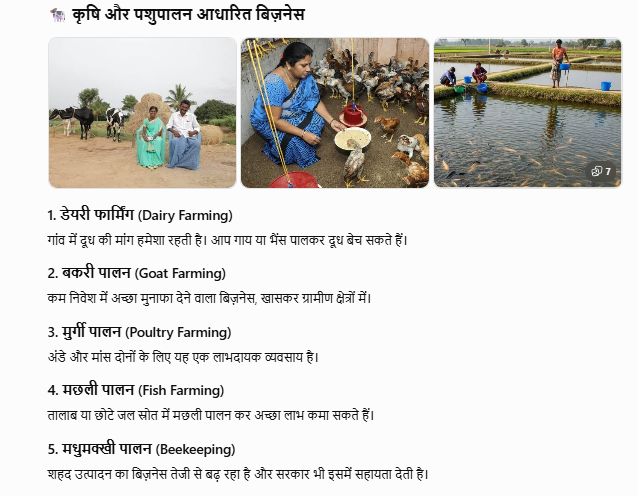
कृषि और पशुपालन आधारित बिज़नेस
1. डेयरी फार्मिंग (Dairy Farming)
गांव में दूध की मांग हमेशा रहती है। आप गाय या भैंस पालकर दूध बेच सकते हैं।
2. बकरी पालन (Goat Farming)
कम निवेश में अच्छा मुनाफा देने वाला बिज़नेस, खासकर ग्रामीण क्षेत्रों में।
3. मुर्गी पालन (Poultry Farming)
अंडे और मांस दोनों के लिए यह एक लाभदायक व्यवसाय है।
4. मछली पालन (Fish Farming)
तालाब या छोटे जल स्रोत में मछली पालन कर अच्छा लाभ कमा सकते हैं।
5. मधुमक्खी पालन (Beekeeping)
शहद उत्पादन का बिज़नेस तेजी से बढ़ रहा है और सरकार भी इसमें सहायता देती है।
6. ऑर्गेनिक खेती (Organic Farming)
आजकल लोग जैविक उत्पादों को ज्यादा पसंद करते हैं।
7. मशरूम उत्पादन (Mushroom Farming)
कम जगह और कम लागत में शुरू होने वाला बिज़नेस।
8. फूलों की खेती (Floriculture)
शादी और त्योहारों में फूलों की मांग बहुत ज्यादा रहती है।
छोटे उद्योग और घरेलू बिज़नेस
9. किराना दुकान (Grocery Store)
गांव में रोजमर्रा की जरूरतों के लिए किराना दुकान हमेशा चलती है।
10. आटा चक्की (Flour Mill)
हर गांव में इसकी जरूरत होती है और यह स्थायी आय देता है।
11. मसाला प्रोसेसिंग यूनिट
घर में मसाले पीसकर पैकिंग कर बेच सकते हैं।
12. पापड़ और अचार बनाना
महिलाओं के लिए बहुत अच्छा घरेलू बिज़नेस।
13. अगरबत्ती बनाना
कम लागत में शुरू होने वाला छोटा उद्योग।
14. मोमबत्ती निर्माण (Candle Making)
त्योहारों और घरों में इसकी हमेशा मांग रहती है।
15. साबुन बनाना (Soap Making)
हर्बल और घरेलू साबुन की डिमांड तेजी से बढ़ रही है।
सेवा आधारित बिज़नेस
16. मोबाइल रिपेयरिंग शॉप
हर गांव में मोबाइल यूजर्स हैं, यह बिज़नेस तेजी से बढ़ता है।
17. ट्रैक्टर/कृषि उपकरण किराये पर देना
किसानों को उपकरण किराये पर देकर अच्छी कमाई कर सकते हैं।
18. साइबर कैफे (Online Services Center)
ऑनलाइन फॉर्म, आधार, पैन आदि सेवाएं देकर कमाई।
19. फोटोकॉपी और प्रिंटिंग शॉप
स्कूल और सरकारी कामों के लिए हमेशा जरूरत रहती है।
20. टिफिन सेवा (Tiffin Service)
गांव में काम करने वाले लोगों के लिए अच्छा विकल्प।
आधुनिक और उभरते बिज़नेस आइडियाज
21. ई-कॉमर्स डिलीवरी एजेंसी
Amazon/Flipkart की डिलीवरी सेवा गांव में शुरू कर सकते हैं।
22. सोलर पैनल बिज़नेस
गांव में बिजली की समस्या को देखते हुए यह तेजी से बढ़ रहा है।
23. मिनी कोल्ड स्टोरेज
सब्जियों और फलों को स्टोर करके मुनाफा कमा सकते हैं।
24. दूध कलेक्शन सेंटर
डेयरी कंपनियों से जुड़कर दूध एकत्र कर सकते हैं।
25. फूड प्रोसेसिंग यूनिट
फल-सब्जियों से जूस, जैम आदि बनाकर बेच सकते हैं।
अन्य लाभदायक बिज़नेस
26. सिलाई केंद्र (Tailoring Shop)
महिलाओं और बच्चों के कपड़े सिलने का अच्छा बिज़नेस।
27. ब्यूटी पार्लर
गांव में भी इसकी मांग तेजी से बढ़ रही है।
28. ईंट बनाने का व्यवसाय
निर्माण कार्य के लिए हमेशा जरूरत रहती है।
29. पौधशाला (Plant Nursery)
पेड़-पौधों का उत्पादन और बिक्री।
30. डे-केयर / प्ले स्कूल
छोटे बच्चों की देखभाल और शिक्षा का अच्छा विकल्प।
गांव में बिज़नेस शुरू करने के लिए जरूरी है सही आइडिया, मेहनत और थोड़ी समझदारी। ऊपर बताए गए 30 बिज़नेस आइडियाज में से आप अपनी रुचि, बजट और संसाधनों के अनुसार कोई भी विकल्प चुन सकते हैं। यदि आप सरकारी योजनाओं जैसे PMFME, Mudra Loan आदि का लाभ लेते हैं, तो आपका बिज़नेस और भी तेजी से बढ़ सकता है।
Starting a business in a village does not require huge capital or urban infrastructure. Success depends on understanding local needs, using available resources wisely, maintaining quality, and building customer trust. Many of the ideas listed above can begin small and expand with experience and reinvestment. Explore government schemes for subsidies and training, keep costs under control, and focus on consistent service. With dedication and the right choice of business, rural entrepreneurs can build profitable, sustainable livelihoods while contributing to the development of their communities. Choose one idea that matches your skills and resources, start carefully, and grow step by step.