
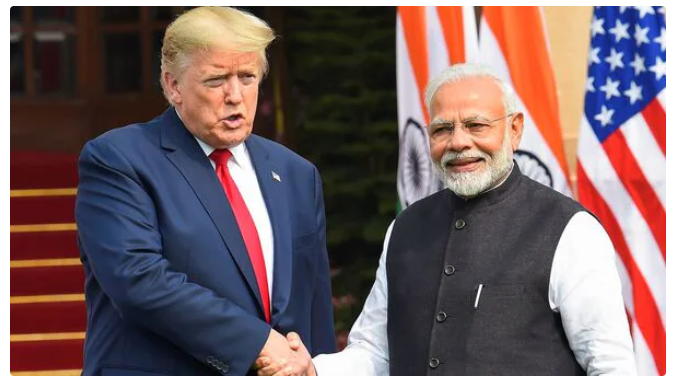
US India Trade Deal: The US–India trade deal marks a significant step toward strengthening economic ties between two of the world’s largest democracies. As bilateral trade continues to expand, this agreement aims to reduce trade barriers, boost investments, and create new opportunities across key sectors such as technology, agriculture, and manufacturing. It reflects a shared commitment to economic growth, supply chain resilience, and strategic cooperation in a rapidly changing global landscape. The deal is expected to benefit businesses, generate employment, and enhance market access for both nations, paving the way for a more robust and mutually beneficial economic partnership in the coming years.
US India Trade Negotiations
The US-India Bilateral Trade Agreement (BTA) represents a landmark effort to strengthen economic ties between the world’s two largest democracies. Negotiations formally launched on February 13, 2025, under President Donald Trump and Prime Minister Narendra Modi, aiming for reciprocal trade benefits amid global supply chain shifts and geopolitical tensions. The deal seeks to address long-standing imbalances, including the US goods trade deficit with India, which stood at approximately $58.2 billion in 2025.
Bilateral trade in goods and services reached around $212 billion in recent years, with strong growth in sectors like technology, pharmaceuticals, and energy. The agreement emphasizes market access, tariff reductions, and non-tariff barrier resolutions to foster resilient supply chains. It builds on the broader strategic partnership, including defense and technology cooperation, positioning both nations against non-market practices from third countries. Progress has been incremental, with an interim framework announced in early 2026 serving as a stepping stone to a comprehensive pact.
US-India Trade Deal: Background and Historical Context
US-India trade relations have evolved significantly over decades, moving from development aid to a robust commercial partnership. Persistent issues like high Indian tariffs on US agricultural and industrial goods, intellectual property concerns, and data localization requirements have historically hindered deeper integration. The US has long pushed for greater market access, while India has prioritized protecting sensitive sectors such as agriculture and dairy.
Tariff escalations under the Trump administration, including reciprocal tariffs and Section 232 measures on steel, aluminum, and other goods, added urgency to negotiations. India’s substantial imports of Russian oil also became a flashpoint, prompting US concerns over energy security and sanctions alignment. Earlier frameworks aimed at mini-deals on specific sectors, but the 2025 launch of full BTA talks marked a comprehensive approach. Trade volumes have grown steadily, with US exports to India rising notably in aircraft, energy products, and technology.
Key Announcement: February 2026 Framework for Interim Agreement
On February 6, 2026, the US and India announced a framework for an Interim Agreement on reciprocal trade, following high-level discussions between President Trump and PM Modi. This was hailed as a historic milestone, with the US committing to lower its reciprocal tariff on Indian goods to 18% from higher previous levels (previously up to 25% or more in some cases). In exchange, India agreed to eliminate or significantly reduce tariffs on a wide array of US industrial goods and agricultural products like soybean oil, wine, spirits, tree nuts, and processed fruits.
The announcement reaffirmed commitment to full BTA negotiations, including rules of origin to ensure benefits accrue primarily to the two countries, and cooperation on non-tariff barriers. India committed to addressing barriers in medical devices, ICT goods, and food/agricultural products. Additional elements included preferential market access, supply chain resilience measures, and India’s intent to purchase $500 billion in US energy, aircraft, technology, and other products over five years. This phase focused on immediate tariff relief and set a roadmap for broader talks.
US India Trade Deal Major Terms and Provisions of the Deal
The interim framework outlines substantial tariff concessions: the US applies an 18% reciprocal rate on many Indian exports, including textiles, apparel, chemicals, and machinery, while removing additional tariffs on items like generic pharmaceuticals, gems, diamonds, and aircraft parts (subject to conditions). India opens its market further to US goods, particularly industrial and select agri-products, while maintaining some protections for its farmers.
Other key provisions include addressing non-tariff barriers, harmonizing standards in mutually agreed sectors, and strengthening economic security alignment against third-party non-market policies. Rules of origin ensure preferential treatment benefits domestic industries. The deal also covers digital trade rules, investment reviews, export controls, and potential outcomes from US Section 232 investigations on pharmaceuticals. Long-term goals include expanding trade in technology products like GPUs and enhancing joint innovation.
Disputes exist around the scale of commitments; Indian statements have been more measured on aspects like Russian oil reduction and massive purchase pledges compared to US announcements. Agriculture remains a sensitive area for India, with protections likely retained.
Recent Developments and July 2026 Updates
As of July 2026, negotiations have advanced significantly. High-level talks in New Delhi involving Commerce Minister Piyush Goyal and US Trade Representative Jamieson Greer in June indicated the sides are “very, very close” to finalizing the first phase of the BTA. On July 22, a senior US official stated that the deal is “literally on paper,” with finalization potentially in 3-4 months, pending completion of US Section 301 investigations into unfair trade practices.
Recent sessions focused on recalibrating after US tariff policy shifts. India seeks preferential treatment to offset advantages lost to competitors like Vietnam. A potential announcement was eyed before certain tariff deadlines, though some delays persist due to ongoing probes and domestic considerations. Both sides continue working toward an interim signing while progressing on the full agreement.
Economic Impacts and Sectoral Benefits
The deal promises boosted US exports in energy, aerospace, agriculture, and technology, potentially narrowing the trade deficit and supporting American jobs. For India, enhanced access to the vast US market for pharmaceuticals, textiles, gems, and IT services could drive export growth and attract investment. Bilateral trade could target $500 billion ambitions through increased flows in high-value sectors.
Supply chain diversification benefits both nations, reducing reliance on other regions. Challenges include impacts on India’s pharma sector from potential future US drug tariffs and the need to balance farmer interests. Overall, the pact is expected to foster innovation, technology cooperation, and economic resilience amid global uncertainties.
Challenges and Roadblocks Ahead
Despite progress, hurdles remain. US Section 301 and other investigations could impose new tariffs, affecting timelines. India’s red lines on agriculture and dairy, plus concerns over data and IP, require careful navigation. Geopolitical factors, including energy imports and third-country dynamics, add complexity. Domestic politics in both countries influence the pace.
Judicial rulings, such as US Supreme Court decisions on tariffs, have caused temporary deferrals. Ensuring commitments on Russian oil reduction and massive purchases prove feasible given market realities poses another test. Balancing reciprocity with development priorities is key for sustainable agreement.
US India Trade Deal: Date and Time
As of July 2026, there is no officially confirmed exact date and time announced for signing a final US–India Trade Deal.
Latest confirmed updates
- A major US–India trade agreement is still under negotiation and not yet signed.
- According to recent reports, the deal is “almost complete” but may take another 3–4 months to be finalized.
- Ongoing tariff investigations (Section 301) are delaying the final signing.
Earlier related development
- A trade-related agreement/announcement between the US and India was reported on 2 February 2026, but this was not the final comprehensive trade deal.
Future Outlook and Potential Timeline
Negotiators aim to conclude the interim agreement soon, with the full BTA potentially following within months to years. A signing within 3-4 months from late July 2026 appears plausible once US investigations wrap up. Success could set a template for other US trade pacts and deepen the Quad and Indo-Pacific economic architecture.
Long-term, the deal could significantly elevate bilateral economic ties, supporting technology transfers, joint manufacturing, and strategic autonomy. Monitoring implementation and dispute resolution mechanisms will be crucial. Stakeholders anticipate positive momentum, provided both sides maintain flexibility on outstanding issues. Continued high-level engagement between Trump and Modi underscores the strategic priority.